
How Long Do Gym Floor Mats Last? A Complete Buyer's Guide
Posted on September 2026 || Last Updated on September 2026 || Author: Yash
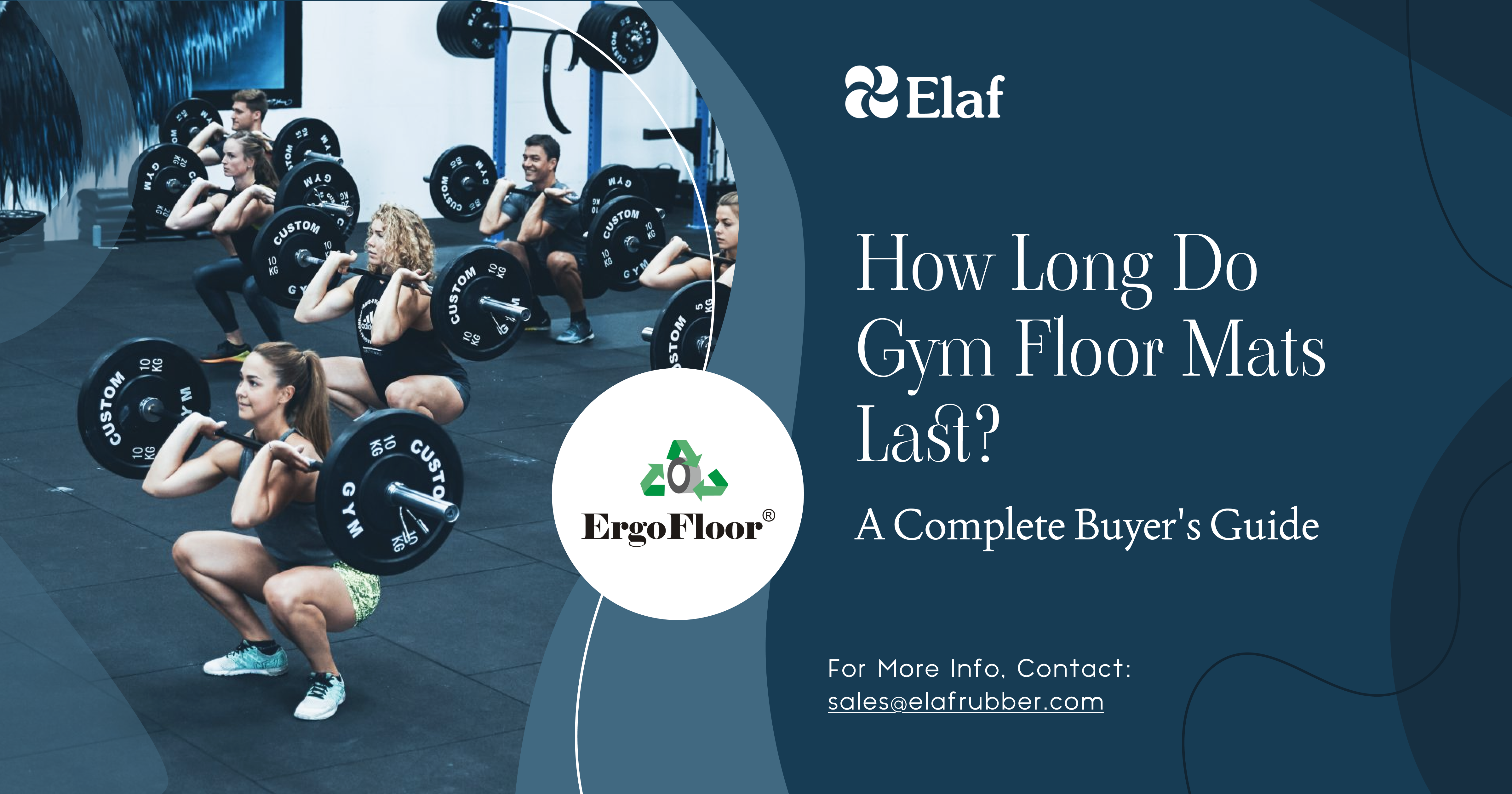
The honest answer to how long rubber gym floor mats last is: it depends entirely on what you bought, where you put it, and what you did to it.
A well-specified commercial rubber floor in a Dubai gym, correctly installed and maintained, can perform reliably for eight to twelve years. The same space with the wrong product, or the right product in the wrong zone, can start showing failure within eighteen months.
This guide covers the factors that actually determine lifespan, what to look for when buying rubber gym floor mats in the UAE, and how to avoid the specification mistakes that turn a long-term asset into a recurring cost. For the full ErgoFloor range, including thickness options and bottom profiles, the product pages have everything you need to spec correctly from the start.
What "Lifespan" Actually Means for Gym Flooring
Before looking at numbers, it helps to define what failure actually looks like, because gym flooring rarely fails all at once.
The signs that a rubber gym floor mat is reaching the end of its useful life include:
• Surface compression that no longer recovers underfoot
• Edges lifting or tiles separating at the joins
• Visible cracking, particularly in high-impact zones
• Loss of anti-slip performance on the surface
• Permanent indentation under fixed equipment
A floor can look acceptable and still be failing. Loss of cushioning and grip is often gradual enough that operators do not notice until an injury or an inspection prompts a closer look.
The Factors That Determine How Long Gym Mats Last
1. Thickness and Zone Matching
The single biggest cause of premature failure in commercial gym floors is under-specification for the actual use.
Rubber gym floor mats are not one-size-fits-all. A tile rated for cardio use will compress and degrade significantly faster when placed under a heavy free-weight rack or used in a CrossFit drop zone. The thickness has to match the training load in that specific area.
As a working guide for fitness centre flooring in the UAE:
• 8 to 12mm: suitable for cardio, stretching and low-impact areas
• 15 to 20mm: functional fitness and general free-weight zones
• 25 to 30mm: CrossFit, heavy dumbbells and slam areas
• 40 to 50mm: Olympic lifting and deadlift platforms
Putting a 10mm tile in a deadlift zone is not under-budgeting. It is buying a replacement floor in advance.
2. Rubber Compound and Recycled Content
Not all rubber is the same. The compound, density and recycled content percentage all affect how the tile performs under sustained load and how well it resists compression over time.
High recycled content is not automatically a problem. Up to 92 percent recycled rubber can perform very well if the compound is correctly formulated and the density is right for the application. The issue is buying on recycled percentage or price alone without understanding what the tile is actually made of.
Ask for a technical data sheet. Check the density rating and the hardness specification. These numbers tell you more about lifespan than any marketing claim. The ErgoTile Quad range carries full technical documentation for exactly this reason.
3. The UAE Climate
This is the factor most gym owners in Dubai underestimate when buying gym flooring mats.
Sustained heat, high humidity and air conditioning cycling all affect rubber over time. Tiles not compounded for this climate can harden, lose elasticity, or degrade at adhesive and join points significantly faster than their rated lifespan in a European environment would suggest.
For fitness centre flooring in the UAE, the compound needs to be rated for the actual thermal range the tiles will experience, not just the conditions in a temperate-climate test lab.
4. Installation Method
An adhesive-free interlocking system and a correctly glued installation will both perform well if done properly. The problems start when installation is rushed, the subfloor is not levelled, or the wrong adhesive is used for the conditions.
The most common cause of gym floor tiles lifting in the first year is not the product. It is a subfloor that was not properly prepared before installation.
A gym flooring installation done correctly, with a level and clean subfloor, adds years to the effective life of even a mid-range tile. A poor installation can undermine the best product on the market.
5. Maintenance
Rubber gym floor mats are low-maintenance by nature, but they are not zero-maintenance. Cleaning with the wrong chemicals, particularly solvent-based cleaners or bleach at high concentrations, can degrade the surface and the compound over time.
Daily sweeping, regular wet mopping with a neutral pH cleaner, and periodic inspection of join integrity will consistently extend the useful life of a commercial gym floor.
When to Replace Rather Than Repair
Individual tiles in an interlocking system can be replaced without lifting the entire floor, which is one of the practical advantages of a floating installation. A section of a drop zone that has compressed beyond recovery can be swapped out while the rest of the floor continues to perform.
When wear is widespread, or when the subfloor itself has been affected, full replacement is usually more cost-effective than ongoing patchwork.
The replacement decision should be driven by performance data, grip tests and compression checks, not just appearance.
Conclusion
Rubber gym floor mats last as long as the specification, the installation and the maintenance allow them to. In a commercial gym in Dubai or across the UAE, that means choosing a compound rated for the climate, matching thickness to training zone, and treating installation as part of the product rather than an afterthought.
Done right, a commercial rubber gym floor is a long-term asset. Done wrong, it is a cost that comes back every two to three years.
Get in touch with the Elaf Rubber team to discuss your gym flooring project. We will recommend the right ErgoFloor product for each training zone in your facility, matched to your usage, your climate and your budget.
FAQ's
1. How long do rubber gym floor mats last in Dubai's climate?
In a well-specified and properly installed commercial gym in Dubai, quality rubber gym floor mats can perform reliably for eight to twelve years. The UAE climate, with its extreme heat, humidity and air conditioning cycling, can shorten that lifespan significantly if the tiles were not compounded for these conditions. Choosing a gym flooring supplier in the UAE who understands regional climate performance, not just catalogue specifications, is one of the most important factors in getting full value from your floor.
2. What thickness of rubber gym flooring mats do I need for a commercial gym in the UAE?
It depends on the training zone. For gyms across Dubai and Abu Dhabi, 8 to 12mm suits cardio and stretching areas, 15 to 20mm covers functional fitness and free weights, 25 to 30mm is right for CrossFit and heavy drop zones, and 40 to 50mm is needed for Olympic lifting platforms. Using a single thickness across the whole facility is one of the most common and costly specification mistakes in UAE commercial gym fit-outs.
3. Where can I buy commercial rubber gym floor mats in Dubai or the UAE?
ErgoFloor, distributed through Elaf Rubber, supplies commercial rubber gym floor mats across Dubai, Abu Dhabi, Sharjah and the wider UAE. The range includes multiple thickness options, bottom profiles and recycled content specifications to match different training zones and project budgets. Elaf Rubber carries local stock and provides technical guidance before purchase, which is particularly useful for larger gym flooring installation projects where zone-by-zone specification matters.