
Designing Splash Parks and Wet Play Areas in the UAE and Saudi Arabia: Why TPV Is the Safe Choice
Posted on October 2026 || Last Updated on October 2026 || Author: Yash
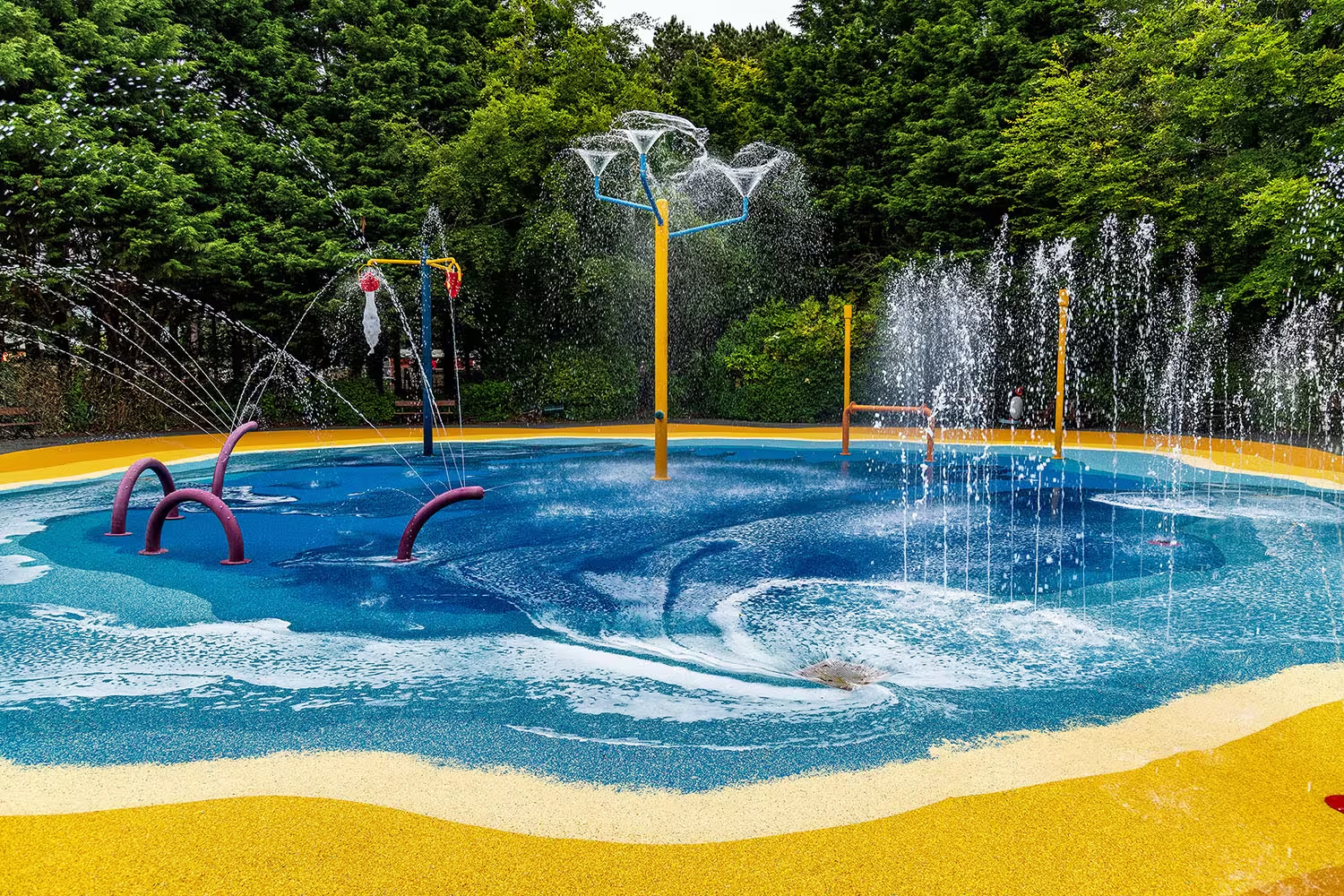
A dry playground surface and a wet play surface are not the same specification problem. The moment water is introduced permanently, the surface material faces a different set of demands: sustained moisture exposure, slip risk on every footstep, chemical contact from chlorine and cleaning agents, and barefoot children who fall differently and hurt differently than shod ones.
In the UAE, Saudi Arabia and the wider GCC, where splash parks, hotel wet play zones and school water feature areas operate year-round in extreme heat, the surface specification has to account for all of these at once. This article covers what those demands actually require from a surfacing material, why Rosehill TPV addresses them, and what specifiers across the Gulf should be asking before signing off on any wet play area surface.
The Specific Demands of a Wet Play Environment
Most outdoor surfacing specifications start with UV stability and impact protection. These remain relevant in a wet play context, but the aquatic environment adds three challenges that dry-surface specifications do not have to solve.
Sustained Moisture Exposure
A splash park surface is wet not just when in use but between sessions, during cleaning, and in some designs almost continuously. A porous surface in this environment absorbs water at the granule-binder interface, which accelerates binder degradation, promotes bacterial growth within the surface matrix, and progressively weakens the structural bond of the system.
Slip Risk Under Bare Feet
Wet play areas are almost always used barefoot, which places greater importance on maintaining reliable grip under permanently wet conditions. A surface that passes standard anti-slip testing in dry conditions may not provide adequate grip in permanent wet use, particularly for running children who are not looking at their feet.
Chemical Exposure
Splash parks and pool surround areas are routinely cleaned with chlorine-based agents and disinfectants. Surfacing materials that are not chemically resistant will degrade at the surface compound level, causing breakdown of colour, texture and structural integrity over time, independently of UV or thermal effects.
The right material for a wet play area solves all three simultaneously, not just one or two.
Why Non-Porous Structure Is the Starting Point
For any permanent wet environment, a non-porous surfacing material is the baseline requirement, not a premium feature.
Rosehill TPV granules are non-porous by compound. Water does not penetrate the granule surface. This means the granule-binder interface remains dry even when the surface above is saturated, preventing the water ingress that causes binder delamination in porous systems. It also means the non-porous surface, combined with its seamless installation, helps prevent bacterial growth by eliminating joints or seams where bacteria can accumulate, an important consideration for children’s wet play areas where hygiene standards are non-negotiable.
A porous granule in a splash park is not just a durability problem. It is a hygiene problem. The same structure that absorbs water absorbs the biological load that comes with it.
For projects across the UAE, Saudi Arabia and the wider GCC where the surface may remain wet for extended periods due to design, irrigation or humidity, this non-porous property is particularly significant.
Slip Resistance Under Permanent Wet Conditions
The texture of the cured TPV surface contributes directly to wet slip resistance. Unlike smooth-finished surfaces that lose grip when wet, a correctly specified wet-pour TPV surface maintains a textured profile that provides meaningful friction under bare, wet feet.
This matters for two reasons in a splash park context. First, children in water play areas run. The slip risk is not theoretical, it is the default behaviour of the user. Second, falls in wet environments tend to occur at higher speed than in dry environments, which changes the injury severity calculation.
Rosehill TPV’s impact-attenuating properties, its ability to absorb the energy of a fall, are maintained by the compound’s elasticity under the sustained wet conditions typical of splash parks and aquatic play areas. A surface that provides both wet grip and fall protection simultaneously is the correct specification for a space where both risks coexist.
Rosehill TPV also supports rapid drainage and quick-dry performance, helping surfaces return to service more quickly after water use while reducing standing water. Combined with its seamless installation, these properties make it particularly well suited to splash parks and aquatic play environments.
Chemical Resistance and Cleaning Compatibility
Chlorine-based cleaning agents are standard in splash park and pool area maintenance across the UAE, Saudi Arabia and the wider GCC. The surfacing material has to withstand repeated exposure without breakdown of colour, texture or the binder matrix.
Rosehill TPV's composition, free from sulphur, heavy metals such as zinc, phthalate plasticisers and clay fillers, means it does not react with the chemical agents used in standard aquatic facility cleaning protocols the way some rubber compounds do. The non-porous granule surface resists chemical absorption, and the MDI-based Flexilon binders used with the Rosehill system are solvent-free and chemically stable in the conditions typical of maintained wet play environments.
Specify a surfacing system whose binder and granule are both rated for chemical exposure, not just one or the other.
Colour and Aesthetics in Wet Play Design
Splash parks and hotel wet play zones are designed environments. The surface is part of the experience, not just a safety specification underneath it.
Rosehill TPV is available in 21 granule colours that can be combined to create custom blends, patterns and branded palettes. Because the colour is UV-stable and the granule is non-porous, the design specified on day one is the design that remains visible years later, not a faded approximation bleached by sun and chlorine.
For landscape architects and resort designers working on water features and splash play zones across Dubai, Abu Dhabi, Riyadh and Jeddah, this means the surface can be designed as a positive contributor to the space rather than a neutral background.
Composition and Child Safety
Children in wet play areas are in direct, sustained skin contact with the surface, more so than in any dry play environment. The composition of the surface material is therefore a safety specification in the most literal sense.
Rosehill TPV is manufactured without sulphur, heavy metals such as zinc, phthalate plasticisers or clay fillers. It is non-toxic and non-allergenic, and it is manufactured under ISO 9001 certification. For wet play areas in schools, nurseries, hotels and public parks across the UAE and Saudi Arabia, this composition profile meets the duty-of-care requirements that specifiers carrying responsibility for child-contact surfaces need to be able to demonstrate, and it holds up under sustained wet contact, not just dry.
Conclusion
A splash park or wet play area surface specification is one of the most demanding in outdoor design: permanently wet, barefoot users, chemical exposure, intense UV, and the full safety obligation that comes with children in a high-risk environment.
Rosehill TPV addresses each of these demands through its non-porous structure, maintained wet slip resistance, chemical stability, UV-stable colour system and certified clean composition. It is not a general-purpose outdoor surface adapted for wet use. It is a material whose properties make it specifically suited to it.
Get in touch with the Elaf Rubber team to specify Rosehill TPV for your splash park or wet play area project across the UAE, Saudi Arabia and the wider GCC. We can provide technical documentation, colour samples and guidance on the right granule and binder combination for aquatic environments.
FAQs
1. What is the best surfacing material for splash parks and wet play areas in the UAE?
For splash parks, wet play zones and pool surrounds across Dubai, Abu Dhabi and the wider UAE, Rosehill TPV wet-pour surfacing is the specification that addresses all three primary challenges simultaneously: non-porous structure that resists water ingress and bacterial growth, maintained slip resistance under bare wet feet, and chemical stability under the chlorine-based cleaning agents used in aquatic facility maintenance. It is also UV-stable, non-toxic and non-allergenic, meeting the composition requirements for surfaces in direct contact with children across GCC projects.
2. Is TPV surfacing slip-resistant when permanently wet in outdoor Saudi Arabia environments?
Yes. Rosehill TPV cures to a textured surface profile that maintains meaningful friction under bare, wet feet, the primary use condition in any splash park or water play area. Unlike smooth-finished materials that lose grip when wet, the TPV surface texture holds up under sustained water exposure without degrading. For outdoor aquatic facilities across Riyadh and Jeddah, where children run on wet surfaces continuously, this wet-specific slip resistance is a core reason the material is specified over alternatives.
3. Where can I specify Rosehill TPV for a splash park or wet play area in the UAE and Saudi Arabia?
Rosehill TPV is available through Elaf Rubber, the authorised distributor for the UAE, Saudi Arabia and wider Middle East. Whether you are designing a hotel splash zone in Dubai, a school water play area in Abu Dhabi, a municipal splash park in Sharjah or a resort wet play facility in Riyadh, the Elaf Rubber team can advise on the right granule colour, binder selection and system design for your specific aquatic environment. Technical documentation, samples and project-specific guidance are all available on request.