
How to Choose the Right Rubber Flooring Supplier in UAE
Posted on September 2026 || Last Updated on September 2026 || Author: Yash
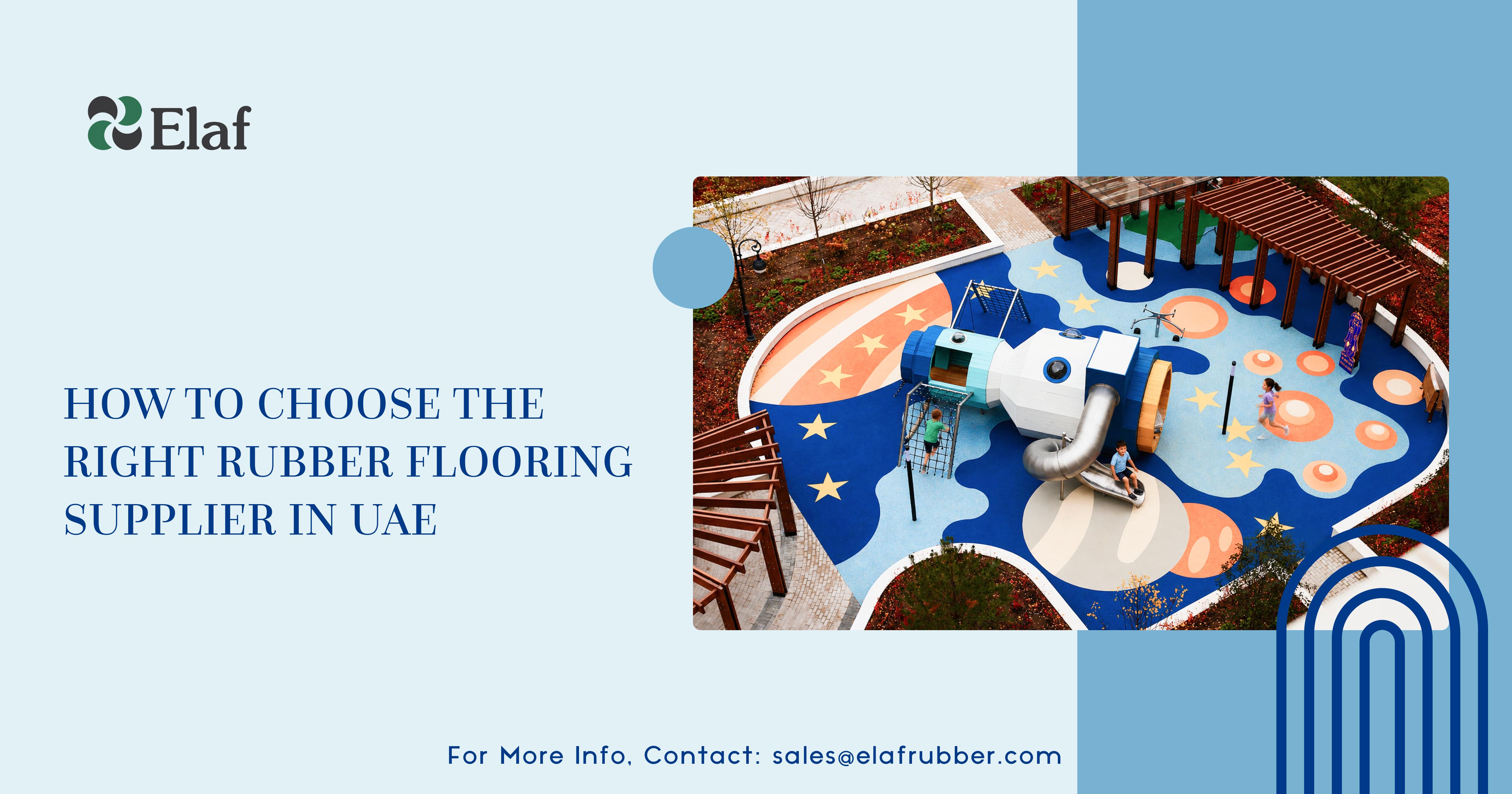
Choosing a rubber flooring supplier in the UAE sounds straightforward until you are three months into a project and the tiles are lifting, the supplier has stopped returning calls, and replacement stock is six weeks away.
The UAE market has no shortage of suppliers. What it does have a shortage of is suppliers who understand the climate, can back their products with proper documentation, and will still be available after installation. This article gives you a practical framework to assess your options before you commit, whether you are sourcing commercial rubber flooring solutions for a gym, a warehouse, or a public facility.
Why Supplier Selection Matters More in the UAE
In most markets, a wrong flooring decision is inconvenient. In the UAE, it can be expensive.
Extreme heat, UV exposure and high humidity mean that products not specified for this environment degrade faster than their datasheets suggest. When that happens, the question is not just which product failed,it is whether your supplier will stand behind it.
The supplier relationship is the safety net. Choose it as carefully as you choose the product.
1. Check Whether They Understand the Regional Climate
The first thing to assess is not the product range. It is whether the supplier understands what the UAE does to flooring.
A good supplier should be able to tell you, without prompting, how their products perform in sustained heat, under UV exposure and in high-humidity environments. If they cannot, they are likely reselling catalogue products without real-world knowledge of how those products behave in this region.
Ask specifically:
• Has this product been installed in UAE conditions before?
• How does it perform under surface temperatures above 40C?
• What is the recommended maintenance in a high-humidity commercial environment?
Suppliers who hesitate on these questions are a risk.
2. Assess Product Range and Technical Depth
A supplier with one or two products to offer is rarely the right fit for a complex commercial project. Different applications need different solutions.
Gym and fitness environments need tiles engineered for impact absorption and anti-slip performance. Industrial rubber flooring UAE projects need a compound that resists chemicals, compression and constant load. Outdoor and playground installations need UV-stable materials with documented safety ratings.
A credible supplier of commercial rubber flooring solutions in UAE should be able to match a product to your specific zone, your subfloor type and your performance requirements, not just point you toward whatever is in stock.
Ask for technical data sheets on any product you are considering. If they are not available, that is a red flag.
One question most buyers forget to ask: can this supplier customise? The UAE market is full of resellers working from a fixed catalogue:- standard colours, standard thicknesses, take it or leave it. A supplier with genuine product depth should be able to offer custom colours to match a brand identity, specific thicknesses for different training zones within the same facility, and surface textures suited to the aesthetic of the space, not just its function.
If the answer to 'can you match our brand colours or a specific finish' is “no”, you are dealing with a reseller, not a flooring partner.
3. Verify Certifications and Documentation
In the UAE, more projects now require flooring to meet specific safety and environmental standards, particularly in education, healthcare and public-sector builds.
Before shortlisting a supplier, confirm:
• Whether their products carry relevant certifications such as EN 14041, CE marking or equivalent
• Whether fire reaction ratings are available and tested
• Whether VOC emission documentation exists for indoor environments
• Whether the product has been tested for slip resistance under applicable standards
A supplier who cannot provide documentation is a supplier you cannot use on a project that requires it, and most serious commercial projects do.
4. Evaluate Installation Support and After-Sales
The product arriving on site is not the finish line. How the floor is installed and what happens if something goes wrong afterwards matters just as much.
When assessing a rubber flooring supplier in Dubai or the wider UAE, ask:
• Do they offer installation support or turnkey supply and install?
• Can individual tiles be replaced if a section is damaged, or does the system require full removal?
• What is their response time if there is a product issue post-installation?
• Do they carry stock locally, or is everything imported to order?
Local stock availability is particularly relevant in the UAE, where project timelines can shift quickly and lead times from overseas can run to several weeks.
5. Look for Regional Experience, Not Just a Product List
Any distributor can put together a website with a flooring catalogue. What separates a reliable rubber flooring supplier in UAE from a catalogue reseller is regional experience, knowing which products hold up here, which specifications are required on local projects and which combinations of surface and underlay actually perform over years of commercial use.
Elaf Rubber has been supplying rubber flooring across the UAE, KSA and wider Middle East for decades. The range includes purpose-built solutions for fitness facilities through the ErgoFloor line and premium sports flooring through Bunde, both of which come with full technical documentation and local supply capability.
That kind of track record is worth asking about when you shortlist. Ask how long a supplier has been operating in the region, what types of projects they have completed and whether they can provide references.
Conclusion
Choosing a rubber flooring supplier in the UAE is not just a procurement decision. It is a decision about who is accountable if something goes wrong. A supplier with regional experience, documented products, genuine technical knowledge and reliable after-sales support is worth more than the cheapest price on the quote.
Use the framework above before you commit to anyone. The questions are simple. The answers will tell you everything you need to know.
Get in touch with the Elaf Rubber team if you are planning a flooring project and want straightforward advice on which product suits your space. We will give you an honest assessment and a recommendation based on your actual requirements, with no obligation.
FAQ's
1. How do I know if a rubber flooring supplier in Dubai is reliable?
Look for three things: regional project experience, the ability to provide certified technical documentation, and clear after-sales support. A supplier operating in Dubai and the wider UAE for several years should be able to give you references from completed local projects and tell you exactly how their products perform in Gulf climate conditions.
2. What certifications should rubber flooring have for commercial projects in the UAE?
For most commercial and public projects in Dubai, Abu Dhabi and across the UAE, look for EN 14041 certification, CE marking, fire reaction ratings and VOC emission documentation. Projects in schools, hospitals or government facilities often require all of these. Always request the full technical data sheet before specifying a product.
3. Is locally stocked rubber flooring better for UAE projects?
In most cases, yes. Local stock availability is a significant practical advantage in the UAE, where project timelines shift quickly and imported orders can take four to six weeks. A supplier with warehouse stock in Dubai or the UAE can turn around urgent requirements and replacements without putting your project at risk.